Smart office buildings use technology to make a workplace safer, more comfortable and easier to run. That covers everything from who gets through the front door to how often the meeting rooms are in use, and it helps companies get more from the space they pay for. If you’re looking for an office space in kochi, it’s worth knowing what these features do, so you can pick a building that suits your teams and still has room for them to grow.
What Is a Smart Office Building?
In a smart office building, systems like lighting, air conditioning, security and room booking are linked together. Sensors and software collect data on how the building is used, and some everyday tasks then run on their own. For instance, a meeting room’s lights go off when it empties, and a building manager can check energy use from a single dashboard. Some buildings also use digital visitor passes and room-booking apps to make daily office routines smoother and more convenient. What’s on offer varies from one building to the next, so find out what’s actually installed before you commit to an office.
How Does Smart Access Control Work in an Office Building?
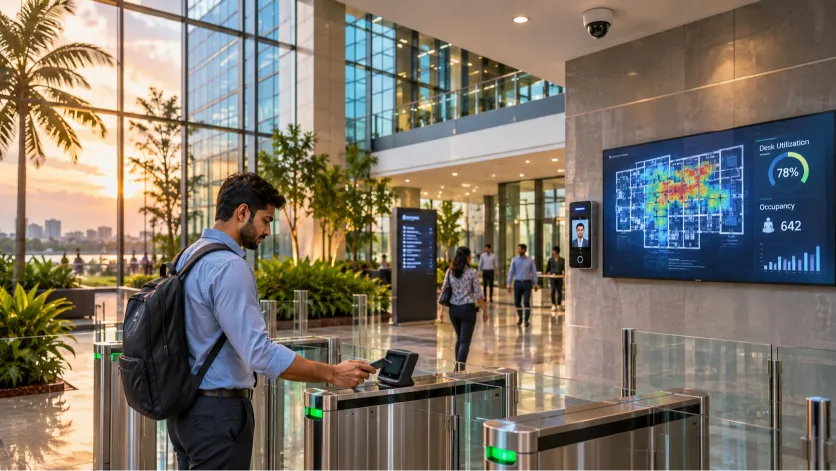
Smart access control decides who can enter the building, or particular areas inside it. Instead of relying only on keys, a building may use access cards, PINs, mobile credentials or biometric checks, depending on how it’s set up. Employees get permissions that match their roles, and visitors can be registered and given temporary access. If your business handles confidential information or valuable equipment, controlled entry makes it easier to keep sensitive areas closed off.
Digital entry records also let the facility team look back at who came and went when they needed to. Still, technology works best alongside clear visitor procedures, staff who pay attention and ordinary physical security. A few questions are worth asking: How are lost cards disabled? How is visitor access handled? What happens to an employee’s permissions when they leave?
What Do Smart Sensors Do in an Office?
Smart sensors notice changes in the workplace so that building systems can respond. Each type does a different job:
Occupancy sensors: Detect whether a room or area is in use, which helps control lighting and, where they’re connected, air conditioning.
Temperature and humidity sensors: Track indoor conditions so the space stays comfortable.
Air-quality sensors: Monitor indicators such as carbon dioxide, so facility teams can judge whether ventilation is enough.
Daylight sensors: Adjust the lighting depending on how much natural light is coming in.
Smoke and water-leak sensors: Warn building teams about safety or maintenance problems.
What Is Space Analytics and Why Does It Matter for Tenants?
Space analytics tracks how desks, meeting rooms and shared areas get used, which tells a business whether its layout matches the way people really work. One company might find its meeting rooms are packed in the afternoon but empty in the morning. Another might discover that a large area sits idle while the small collaboration rooms are always booked.
With that knowledge, you can rearrange rooms, tighten up booking rules and plan seating better. It’s especially handy for hybrid teams, where attendance changes through the week. And before you lease more space, you can check how well you’re using what you already have.
How Do Smart Buildings Save Energy and Cut Running Costs?
Lighting, cooling and other building systems keep burning energy even when nobody’s in the room. Smart controls cut that waste by responding to occupancy, daylight and schedules. Lights go off by themselves in empty rooms, and connected climate controls adjust cooling based on how a room is used. Energy monitoring also helps facility teams notice unusual consumption and identify areas for improvement.
Don’t expect a fixed level of savings, though. Results depend on the building’s design, the equipment, how people use the space and how well the systems are managed. Even so, monitoring and automated controls give businesses better information for keeping running costs in check.
Are Smart Office Buildings Secure and Private for Employees?
Connected systems can make a building easier to manage, but they need careful protection. Access records, visitor details and occupancy data can show where people go and how they work. Businesses should ask who can see this information, how long it’s kept, and whether employee monitoring is limited to a clear, necessary purpose. Where possible, aggregated occupancy data shows how busy an area is without identifying individual employees.
The building’s technology needs protection too: secure networks, updated software, limited administrator permissions and clear procedures for handling incidents. Smart features should make the workplace safer, not turn it into a surveillance exercise.
What Smart Features Should You Look For in a Kochi Office?
When evaluating office spaces, look beyond the 'smart' label in marketing materials to verify actual tech capabilities. Find out which systems are actually installed and how they would help your business. Useful features might include controlled entry, visitor management, dependable internet, efficient lighting, air-conditioning controls, energy monitoring and easy meeting-room booking. Reliable power backup and well-run common facilities also matter, especially for teams that can’t afford downtime.
If you’re looking at office space in Kakkanad, think about how the building supports your daily workflow. Businesses looking for a ready-to-move office space in a Kochi IT park should confirm the fit-out status, the available infrastructure and any changes needed before moving in. And when you’re comparing office space for rent in Kochi, look at parking, access, maintenance arrangements and room to expand.
Why Are Smart Office Buildings Becoming a Priority for Kochi Businesses?
Kochi’s office market keeps developing, particularly around its suburban IT corridors. As hybrid work models become standard, businesses in Kochi require workplaces that offer flexibility, safety, and efficiency. Employees expect frictionless access, clean indoor air, and comfortable working conditions. At the same time, company leaders require transparent data to justify their real estate investments.
For growing businesses, choosing an office is about more than counting square feet. The location should support reliable operations, employee convenience, security and changing team sizes. If you’re evaluating office space in Kochi, compare how each property meets those needs today and whether its facilities will stay useful as your business changes.
How Does Lulu Techpark Support a Modern, Connected Workplace?
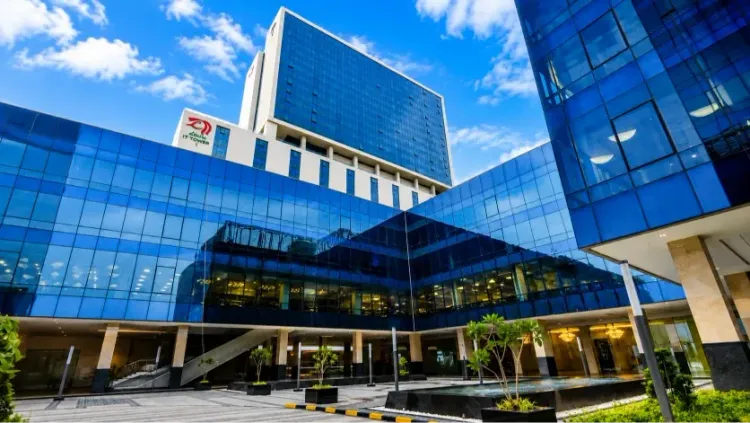
Lulu Techpark brings office infrastructure and workplace facilities together at SmartCity, Kochi. Its official website lists high-speed fibre connectivity, round-the-clock security and controlled access, full power backup and extensive parking. It also highlights energy-efficient systems and green building practices.
These matter to businesses that rely on dependable connectivity, controlled premises and steady day-to-day operations. The campus lists amenities such as food courts, landscaped spaces, a large auditorium and other services for employees. Specific smart-building features, such as occupancy sensors or detailed space analytics, can vary by property and office configuration, so ask the team directly instead of assuming every system is included.
Choose a Smart, Future-Ready Office at Lulu Techpark, Kochi
The right workplace pairs suitable infrastructure with the space and facilities your team needs. Whether you’re considering a conventional lease or a managed office space in Kochi that your business can adapt to its needs, look at connectivity, security, power reliability and shared amenities.
Explore the office options at Lulu Techpark and talk to our team about available spaces, facilities and your requirements. A well-chosen office gives your team a solid footing as the business grows.

Lulu ITpark
Tech Community WriterHi! I’m a writer for Lulu IT Park, sharing the latest updates, technology trends, and industry insights from our vibrant tech community. I’m passionate about highlighting workspace innovation and the incredible growth within our campus.